The Friendship Formulas
A welcoming information and advocacy hub for autistic and neurodivergent students, families, educators, and peers.
Autism 101
Understanding autism and neurodiversity
Autism is a lifelong neurodevelopmental difference that can affect communication, social interaction, learning, behavior, routines, and sensory experiences. It is called a spectrum because autistic people can have very different strengths, challenges, and support needs.
How this site talks about autism
We use respectful, plain language and avoid treating autism as something that needs to be “fixed.” Autism is different from person to person, so no single strategy works for everyone. When possible, ask the person what helps them.
What may look different
Communication style or processing time
Comfort with eye contact or group conversation
Sensory responses to sound, light, touch, crowds, or movement
Need for routine, predictability, or advance notice of changes
Focused interests, repeated movements, or preferred ways of regulating stress
What inclusion should remember
Different does not mean less capable.
Behavior often communicates a need.
Eye contact is not the same as attention.
Communication can include speech, writing, AAC, gestures, or other methods.
Ask what helps instead of assuming.
At school
Inclusion is more than being in the same room.
Make expectations clear
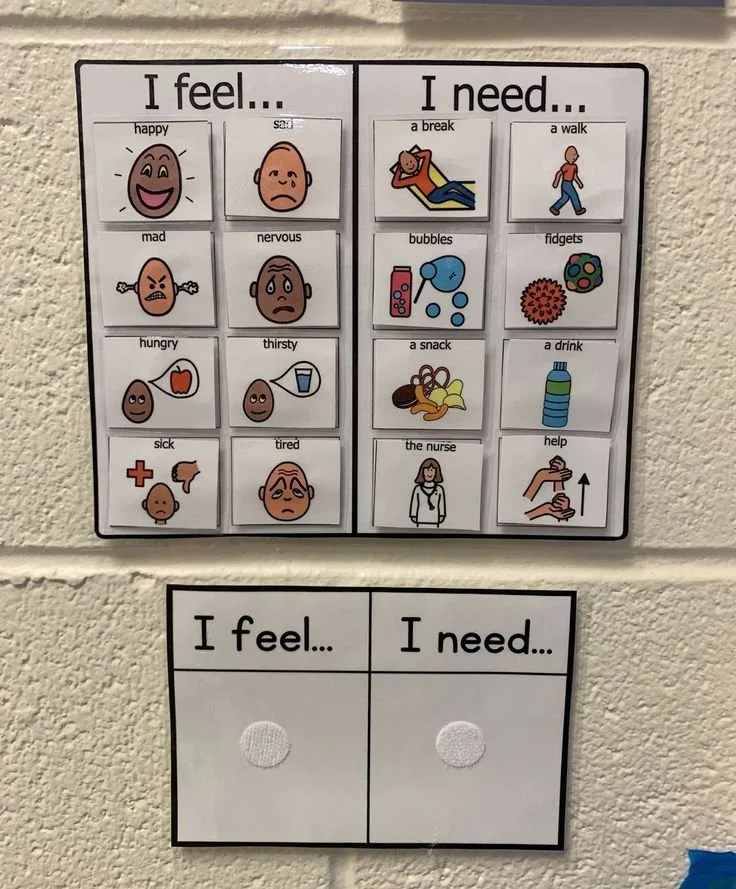
Use written directions, examples, visual schedules, and advance notice when plans change.
Build real peer connections
Create natural opportunities around shared interests without forcing social interaction.
Offer different ways to participate
Speaking is not the only way to contribute. Writing, typing, AAC, ASL interpretation, or another format may work better.
Protect dignity
Address bullying, avoid public shaming, and include students in decisions about their own supports.
Plan for sensory needs
Consider noise, lighting, seating, crowds, movement, transitions, and access to calmer spaces. Create sensory spaces, and areas that accomodate sensory needs.
Keep the learning meaningful
Remove unnecessary barriers without automatically lowering expectations. Support and rigor can exist together.
A student is included when they can access learning, participate meaningfully, build relationships, and feel that they belong.
For students
Self-advocacy can start small.
If you are autistic or neurodivergent
Write down which situations are difficult and what helps.
Ask for directions in writing if that is easier to process.
Ask about sensory breaks, quieter settings, or extra processing time when appropriate.
Tell a trusted adult if bullying or exclusion is affecting you.
Bring your strengths, interests, and goals into school support conversations.
If you are a peer or friend
Invite, but do not pressure.
Be clear instead of relying only on hints or sarcasm.
Give someone time to answer.
Respect AAC, sensory tools, movement, or breaks.
Connect through shared interests.
Speak up when someone is being excluded.
For families & educators
School supports should be individualized.
IEP
Individualized Education Program
Eligible students may receive specialized instruction, goals, services, accommodations, and related supports based on educational needs.
504
Section 504 Plan
Some students may qualify for accommodations or supports that provide meaningful access to school programs even when they do not receive special education under IDEA.
UDL
Universal Design for Learning
UDL encourages schools to design learning with multiple ways to engage, access information, and show understanding.
Families can ask
What are my student’s strengths and interests?
Which situations create the biggest barriers?
What has already worked?
How will progress be measured?
How can my student participate in decisions?
Educators can ask
Am I measuring the learning goal or an unrelated barrier?
Is there more than one way to access the material?
Is there more than one way to show learning?
Have I asked the student what works for them?
Does this classroom communicate belonging?
Educational supports are individualized. This website is a starting point, not legal or medical advice.
Programs & connection
Friendship can change a school culture.
Best Buddies
Friendship, leadership, and school inclusion
One-to-one friendship
Student leadership
Inclusive school activities
Advocacy and community
Job and living support
Vacations with a community
Friend in Me
Connection in a familiar online space
Friend in Me connects neurodivergent and neurotypical students through regular virtual conversations, games, and shared activities.
Relaxed virtual conversation
Friendships that grow over time
Another option for students who prefer online communication
Connection across distance
What this can teach us: inclusion does not have to happen in only one kind of space. Different ways of participating can make connection easier.
BBLC
Learning from other student leaders
The Best Buddies Leadership Conference brings together students, advisors, volunteers, and advocates to share ideas about leadership, chapter building, advocacy, inclusion, and community.
Los Angeles public schools
Local information for students and families
Start with official district resources when you need current information about special education, school supports, IEPs, family workshops, or referrals.
Los Angeles Unified School District
Division of Special Education — Parent Resources
LAUSD provides parent guides, workshops, Student-Led IEP resources, information about accessing IEPs through the Parent Portal, and other special education supports.
Los Angeles Unified School District
Child Find
For families who suspect a student may have a disability and may need special education services, LAUSD explains how to begin the referral process.
Research & trusted resources
Go deeper with reliable sources.
These resources can help students, families, educators, and advocates learn more.
Children’s Hospital of Philadelphia
Center for Autism Research (CAR)
CAR combines autism research, education and guidance for autistic people and families, and training for future clinicians and scientists.
CHOP CAR
CAR Autism Roadmap
Information and resources for autistic individuals, families, and professionals across the lifespan.
CAST
Universal Design for Learning
Guidance for designing learning environments that reduce barriers and support learner agency.
NIMH
Autism Spectrum Disorder
A plain-language overview of autism, characteristics, diagnosis, and support.
U.S. Department of Education
Disability Rights in Schools
Official information about disability discrimination, Section 504, access, and accommodations.
ASAN
Autistic Self Advocacy Network
Resources from an autistic self-advocacy and disability-rights perspective.
Autism Society
Education Resources
Practical information about IEPs, 504 Plans, educational eligibility, and school supports.